Prediction markets, which allow users to bet on the outcomes of real-world events, are surging worldwide but remain squarely illegal in the Philippines under current gambling laws, according to gaming law expert Marie Antonette ‘Tonet’ Quiogue.
‘Prediction markets may be a fascinating new tool for forecasting and investment abroad, but here they squarely hit the regulatory wall of gambling law,’ Quiogue wrote in a recent analysis published by Arden Consult. ‘In the Philippines, not all bets on the future are ones you’re legally allowed to make.’
Global trading volumes in prediction markets surged past $2 billion in mid-October, with investors wagering on everything from elections to entertainment outcomes.
Platforms like Polymarket and Kalshi have gained mainstream traction, with the Intercontinental Exchange — owner of the New York Stock Exchange — announcing a $2 billion investment in Polymarket, valuing it at roughly $8 billion.
But the same cannot happen in Manila. ‘Under Philippine law, if you bet money on an outcome that involves any degree of chance, it’s gambling by definition,’ Quiogue explained. ‘Unless authorized by law and licensed by PAGCOR, any operation of this sort targeting Philippine users would be unlicensed and illegal.’
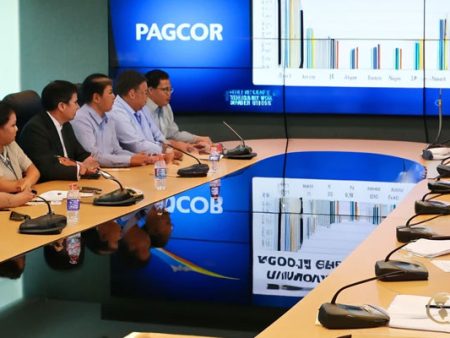
The Philippine Amusement and Gaming Corporation (PAGCOR) regulates all gambling activities, and Quiogue said no license has yet been granted to any prediction market platform. ‘If you run a real-money prediction market in the Philippines without PAGCOR authorization, you are running an illegal gambling operation,’ she said.
Unlike the United States, which has moved to regulate prediction markets as financial instruments under the Commodity Futures Trading Commission (CFTC), the Philippines lacks a comparable framework.
‘We have no legal concept of an ‘event futures contract’ under securities or commodities laws,’ Quiogue noted. ‘So a prediction market can’t try to register with the Philippine SEC as a trading exchange for event contracts — there’s simply no law that clearly permits that yet.’
Even civil law presents a barrier. Under the Civil Code, gambling contracts are void and unenforceable. ‘A bettor who ‘wins’ in a prediction market cannot compel payment in court, and the platform cannot legally collect ‘losses’ from participants,’ Quiogue said.
She also warned that betting on political outcomes is strictly forbidden. ‘Wagers on Philippine election results are absolutely off-limits — they are illegal in and of themselves under election law,’ she said. ‘Even office betting pools or informal election bets have been publicly discouraged by COMELEC.’
The only potential loophole, she added, would be to eliminate real-money stakes. ‘A no-stakes prediction market is legal, but it’s essentially just an academic exercise,’ Quiogue said. ‘Without real wagers, it loses the very incentive that makes it effective.’
For now, she said, ‘the safe answer is ‘no, not for real money’’ when asked whether prediction markets can legally operate in the country. ‘Our laws and regulators treat them as gambling, and none of the current frameworks provide a carve-out,’ she concluded.
Still, Quiogue left open the possibility of future reform. ‘If the SEC succeeds in establishing a domestic commodities or futures market, there might eventually be room to classify certain event contracts as financial instruments rather than bets — but that would require new legislation,’ she said.